
Various Techniques
The different electroculture methods: from Lakhovsky rings to modern techniques. Understand the principles and the results.
Various techniques
Many techniques are gathered under the electroculture label. Some are curiosities that have no scientific explanation. Others are purely esoteric — not necessarily meaningless, but they damage the credibility of these techniques in the public eye.
Plants are living beings just like you and me, or your pet. All living beings are made of the same building blocks.
Each species has characteristics adapted to its metabolism: its degrees of freedom, its decision centres, its means of reproduction, its defence techniques. If the adaptation is poor or unreliable, the living being doesn’t survive and the species disappears. If environmental conditions change, the ability to adapt allows the living being to find workarounds to continue its life cycle. Every living being has its predators and its protectors.
All agricultural techniques aim to improve the environment of cultivated plants. By supplying substances or conditions favourable to plant growth, by favouring protectors, by adding substances harmful to predators. All these inputs are made with the lowest possible amount of work thanks to mechanisation. Each technique brings its own share of benefits and drawbacks, which we notice in the short term or after decades.
Lakhovsky rings
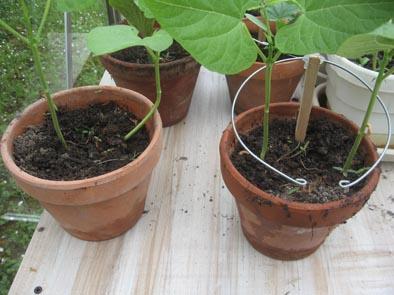
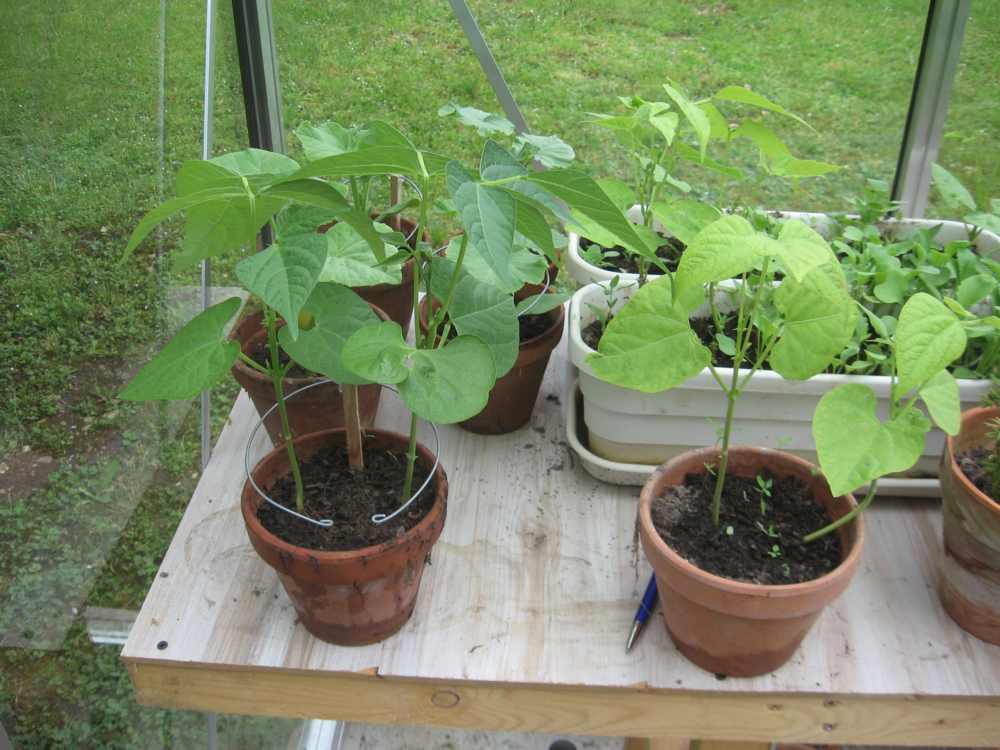
Lakhovsky rings are devices that defy the laws of physics and electromagnetism — no one has been able to demonstrate how they actually work.
The principle is simple: place around a plant in a flowerpot or in open ground a circle of metal, open at one end, held 10 to 15cm above ground by small insulating stakes. The metal must not touch the plant. The opening is tilted about 20° downwards and oriented towards magnetic North (see photo 1 opposite). Through an effect that electromagnetic physics cannot explain, the plant responds to this device and grows significantly faster.
Photo 2 shows the growth increase. Leaf colour is deeper. Leaves are larger.
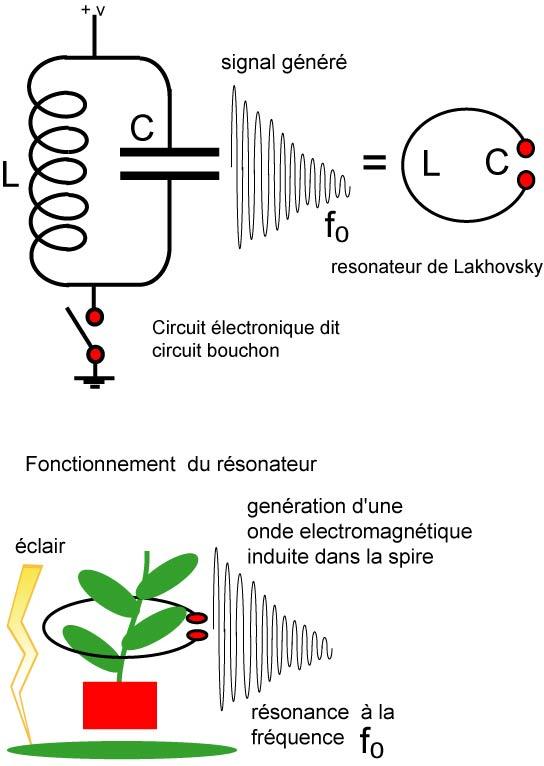
Electromagnetic physics offers as explanation that the loop and the gap form a well-known electronic resonator oscillating at a frequency of several tens of MHz. How an uncalibrated frequency (the loop and the gap aren’t necessarily the same size) could act on the plant, what the Earth’s magnetic field’s influence is (since the gap must point North and the resonator must be tilted ~20°), what the loop material’s influence is — none of these questions have a satisfying answer. In our view, “the truth is elsewhere” — in a different physics from the energy-based physics of our reality.