
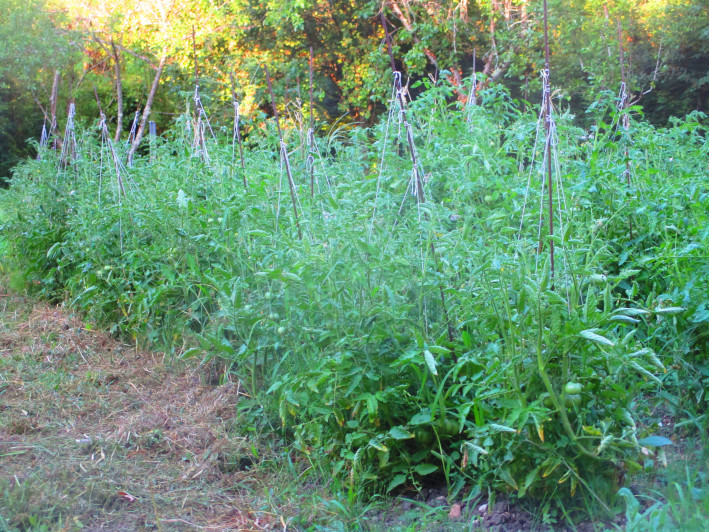
Since mid-May, France has enjoyed warm, pleasant weather, with peaks reaching 40°C — which is a little less pleasant. If you don’t live in an old house, whose thick walls store heat and naturally keep the indoor temperature around 25°C, these swings can turn the house into a furnace by day, and a pleasant refuge very early in the morning.
The 1911 heatwave lasted from July to mid-September, with an average temperature in France of 35°C and peaks of 37.7°C recorded in the Paris region. Of course, the climate, which is global, has a slight upward trend, but the weather, which is local, plays its own game, with localised extremes. Nothing too serious, except that excessive heat disrupts our metabolism. Many countries have an average temperature above 30°C, with peaks over 50°C: they have adapted their way of life.
In the vegetable garden, things are a little more complicated: the soil and plants aren’t always suited to these temperatures. Seeds come from plants that grew under optimal conditions, and haven’t recorded such fast, large swings in their genome. This is what epigenetics explains: in short, parents’ experience benefits their offspring through changes in gene expression, to adapt to variations in their environment. The seeds you harvest at the end of the season will surely be better adapted to high heat.
The tomatoes in the production garden
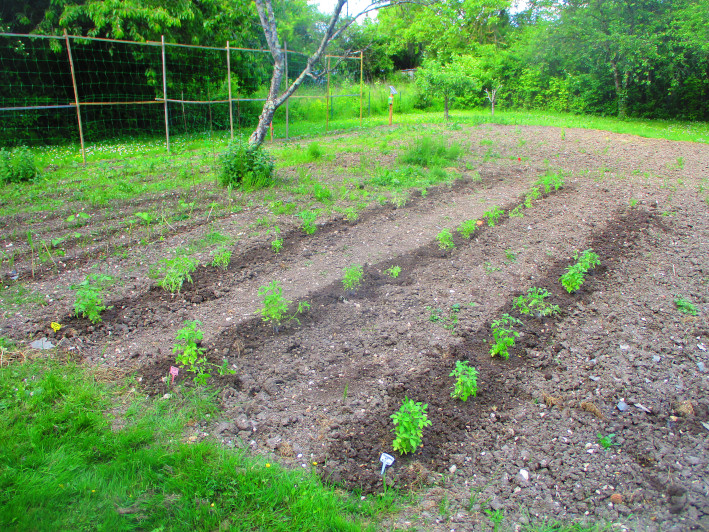
In my production garden, the tomato plants were set in place on 9 May 1. They had time to root while benefiting from electroculture and the new-formula booster. Their strong growth shows that the effect of electroculture, combined with early rooting, keeps them from being disrupted by the heatwave.
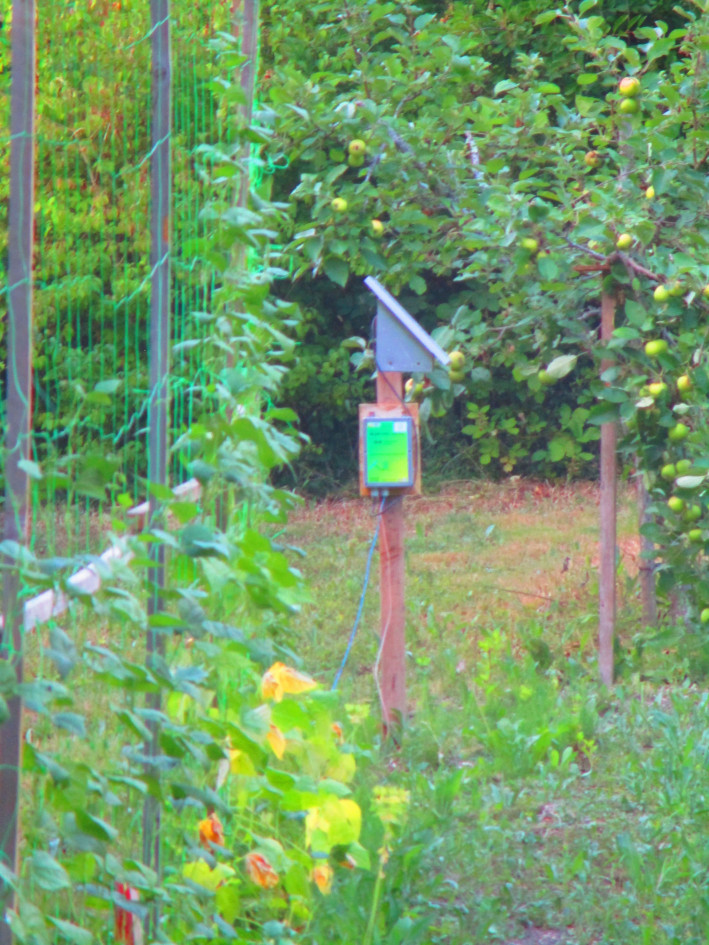
Electroculture in this garden is provided by the Plantonic 300 and its solar panel tilted at 45° 2.

The plants now stand 1.10 m tall 3.
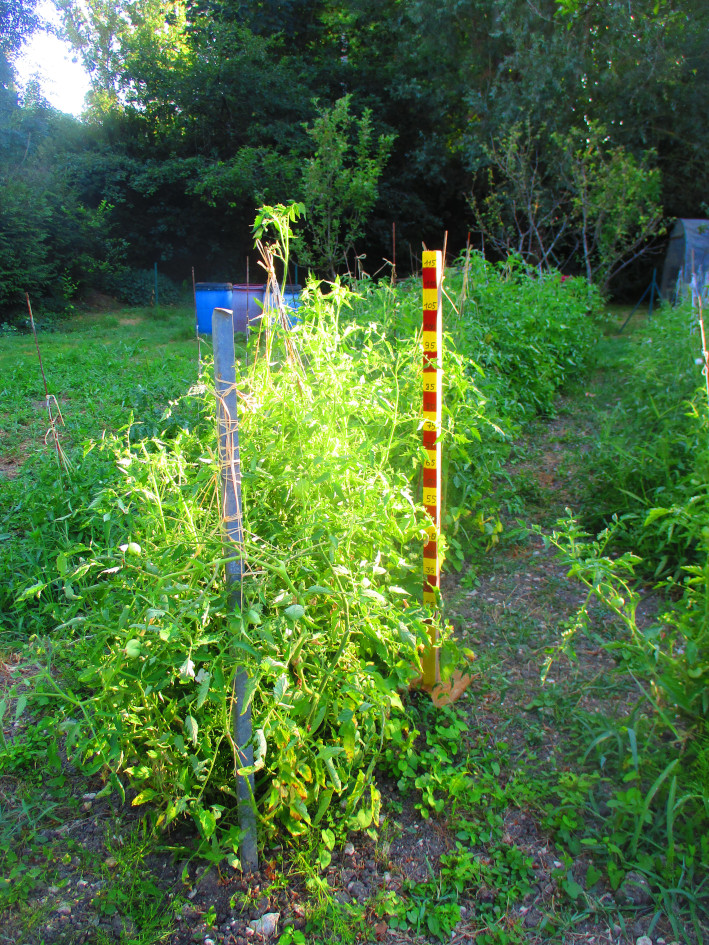
The stems are rigid, about the thickness of a finger 4 5, and the fruit is already well formed — just waiting to turn red 6.
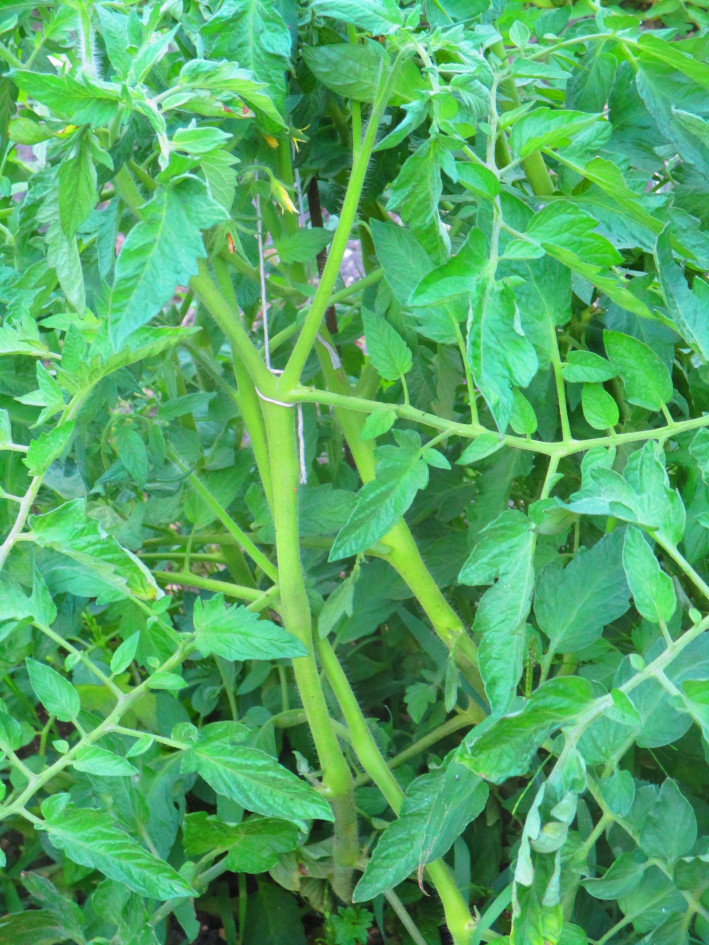
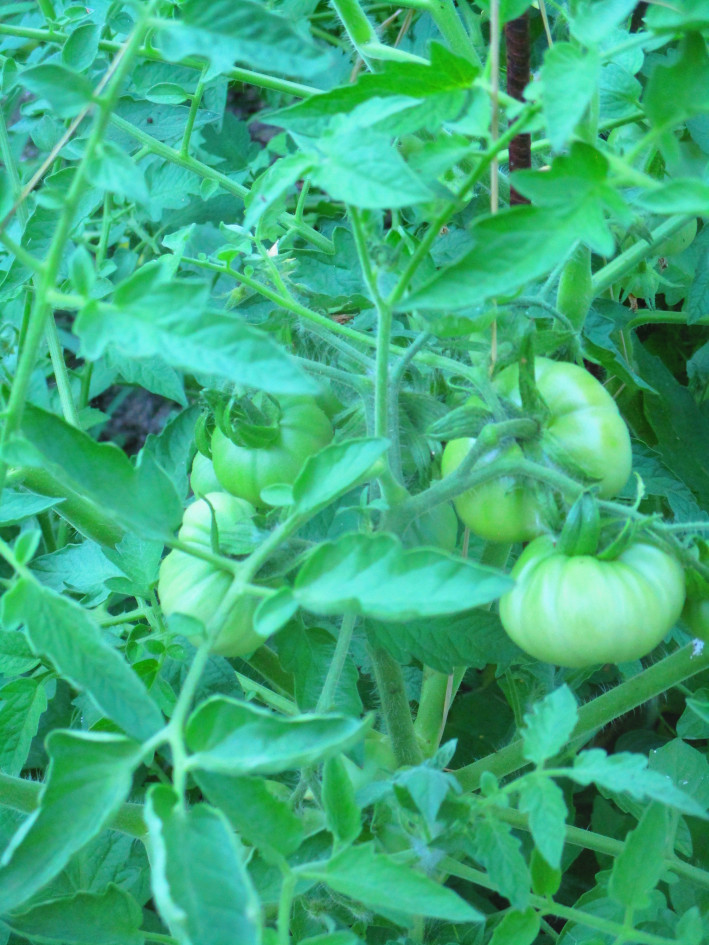
This plot had water at -10 cm below the surface in May. That level dropped to -30 cm during June, and is perhaps lower still today. However, as I explained on Plantonic.fr and Plantonic.org, electroculture changes the way water moves through the soil: it crusts less, and digging just a few centimetres down, you can still feel moisture.
The tomatoes in the new garden

The tomato plants in this second garden were planted on 8 May 7, in tougher but electrocultivated soil. Water is present in a nearby stream, 1 m down; the soil is clay-limestone. Watering demand is therefore higher here.
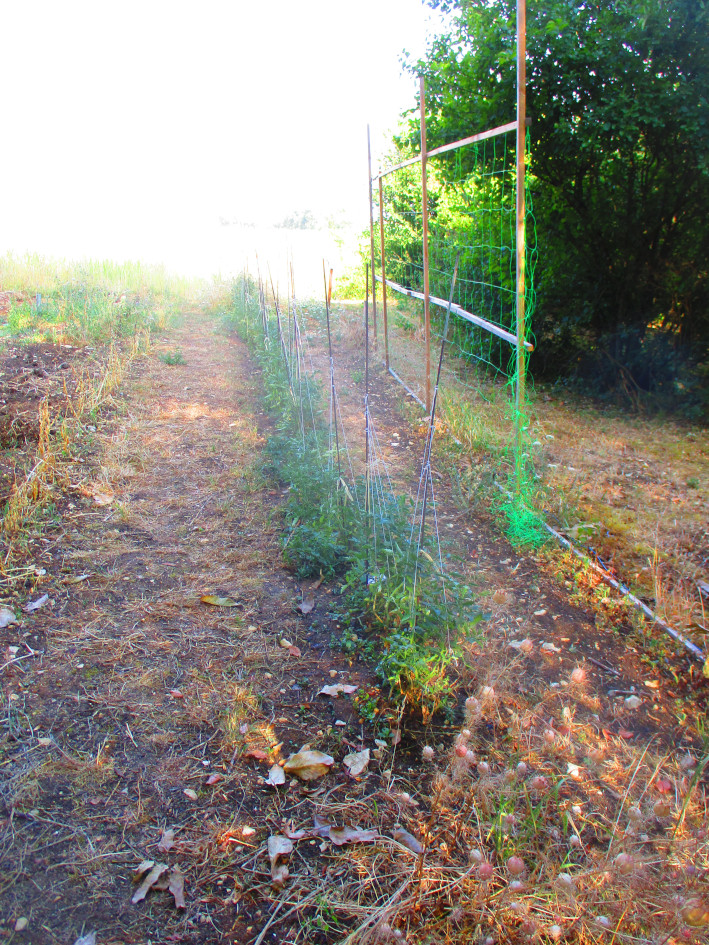
Even so, the plants developed well 8 9. In mid-June, they went unwatered for a week: this lack of water held back their growth. By 30 June their height ranged from 45 to 65 cm 10.
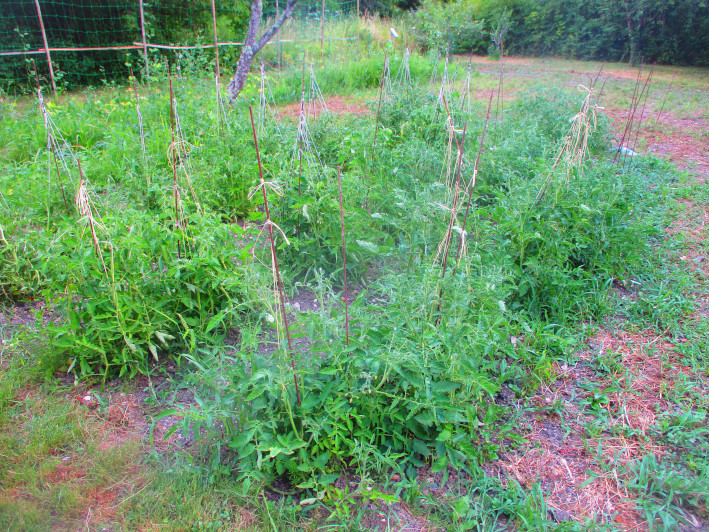
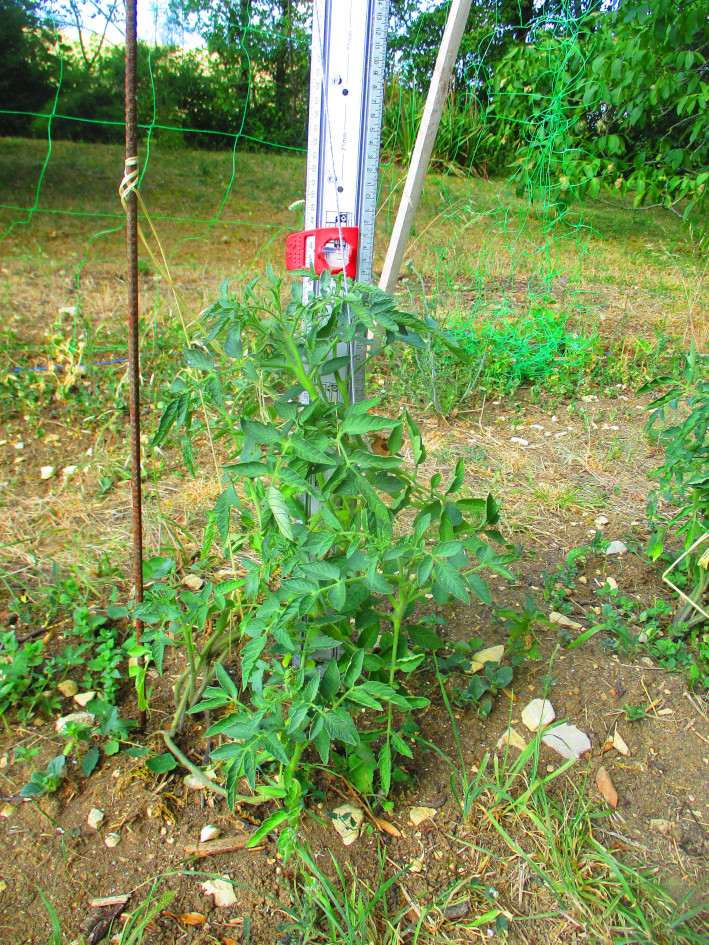
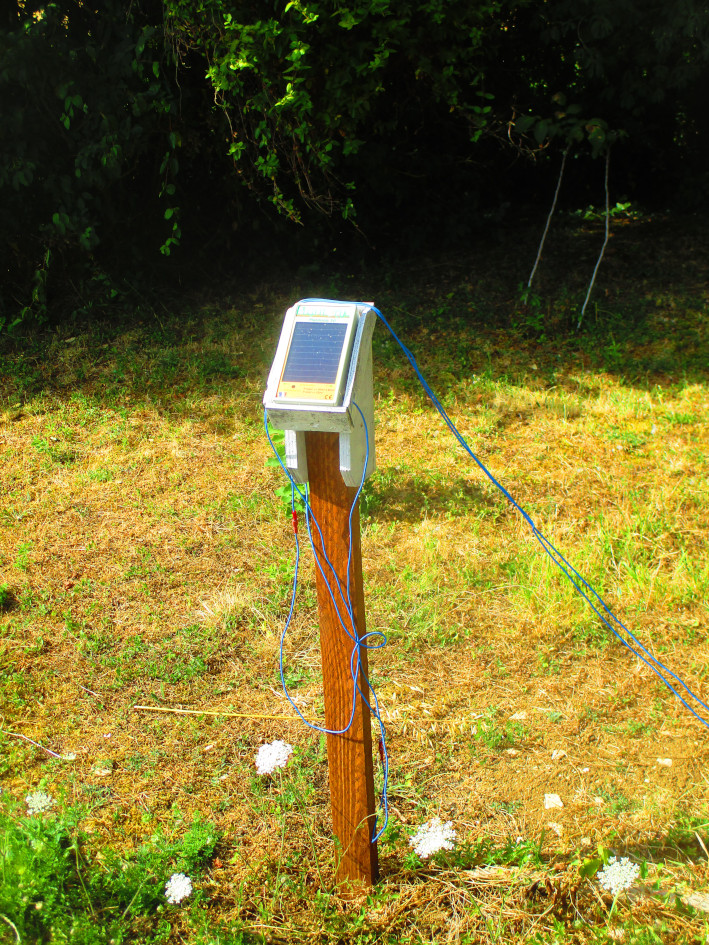
Electroculture here is provided by the Plantonic 50 11. Daily watering is needed, in the cool of the morning, so the water soaks properly into the soil.
My secret fertiliser, compatible with electroculture
Every morning, I add urine to my 200 L watering-water reserve tank, drawn from my well. Here’s an explanatory document on the topic.
If you’re not on antibiotics, any long, heavy course of medication, or the contraceptive pill, you can use this magic liquid that you make yourself every day. Urine delivers nitrogen straight to the plants’ roots. Avoid wetting the leaves when watering: medication residues are “poisons” that can disrupt the microbial life of a living soil.
Between early rooting, electroculture and well-managed watering, both gardens show that tomatoes can get through a heatwave without suffering too much — as long as the water goes in at the right time, and in the right place.