
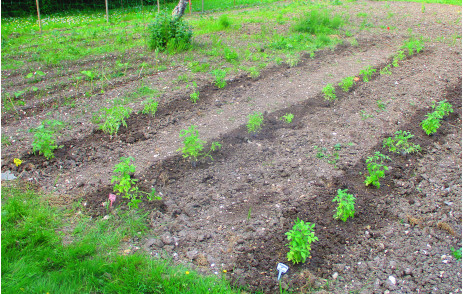
We’re in May: the ongoing crops have developed nicely. It’s easy to see the growth differences between the electrocultivated zone and the zone without stimulation, where the controls are. Our criterion will be measuring the aerial part — its volume is directly linked to plant height.
Potatoes
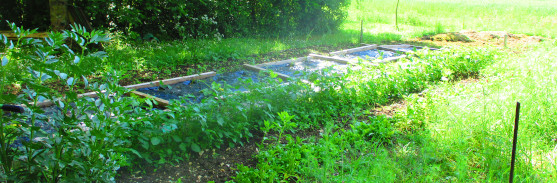
The photo opposite shows the row of electrocultivated potatoes 1. The control potatoes are to the right, in the sunny part, and aren’t visible in the shot.
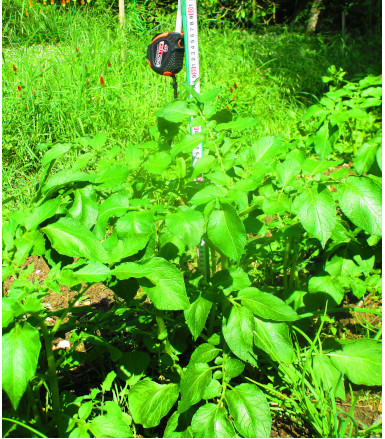
The average height of the electrocultivated potato plants reaches 50cm 2, while the control plants don’t exceed 20cm 3.
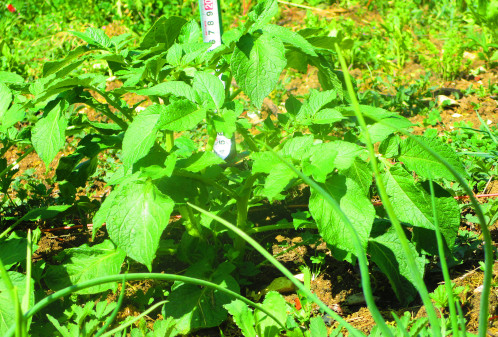
Thanks to electroculture, plant growth is doubled — in height and width — under strictly identical growing and watering conditions.
Planting tomatoes in open ground
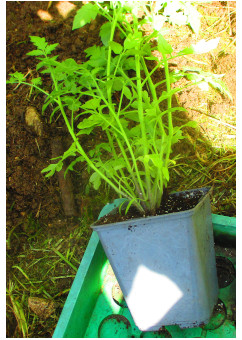
It’s early May and, given the mild weather, I’m taking the risk of transplanting the tomato plants before the Ice Saints. The seedlings were started by placing several seeds in the same pot; they all germinated. I let them grow in a bush 1, without selecting the most vigorous stem.
Method
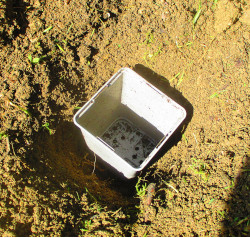
Dig a hole twice as wide and deep as the pot 2.
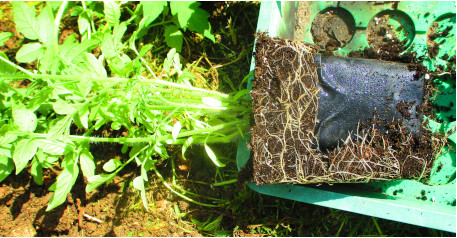
When you remove the pot, you find the small seed-starter pot, which you can keep or take out.
Leaving the seed-starter pot avoids breaking the roots during repotting, and therefore stressing the still-fragile plant. You can also slit the plastic with scissors. This pot will be recovered when you pull up the plant in autumn — you can also use biodegradable pots.
You can see that all the soil added during repotting has been colonised by the roots 3.
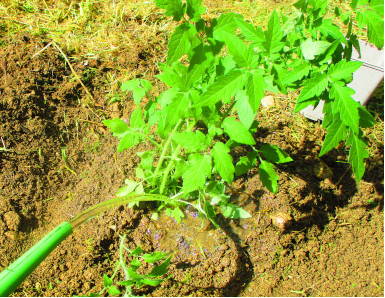
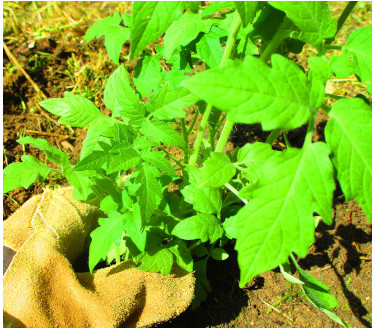
The tomato plant is placed in the hole then secured with fine soil, covering part of the aerial stems with soil. Finish with generous watering 4 5.
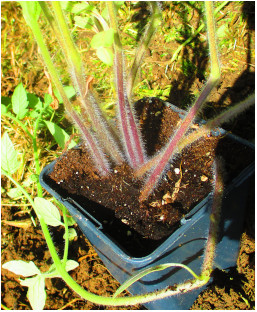
Tomato plant stems are hairy: when covered with soil, these hairs turn into roots. Hence the value of planting deep 6.
And there’s the job done! Each row is spaced about 70cm apart, and each plant 50cm. A simple pass with the mower will easily clean the aisles 7.

Water every day for the first 15 days — except in case of rain — to encourage fast rooting of the plants. Use clean water from a well or covered reservoir to avoid the proliferation of pathogens, and avoid watering the foliage. In electroculture, no treatment is necessary: blight is rare and usually mild. Pinching out side-shoots isn’t essential, except to air the plants.