
Autumn is the ideal season to plan or modify your vegetable garden, based on
the flaws you noticed during spring and summer. The gardener should
imagine modifications, extensions, or simply the creation
of a new vegetable area.
The essential points
- The garden’s surface, soil quality, possible or known pollution.
- Orientation, sunlight, proximity of trees.
- Water points for manual or automatic watering.
- Protection against prevailing (west) and cold (north-east) winds.
- A storage or compost zone for farm waste.
- A shed for tool storage nearby.
- A cold frame for seedlings or a greenhouse.
- An electroculture device and its electrodes if you want abundant harvests of top taste quality and health prevention.
A vegetable garden should be set up for pesticide-free growing — no treatment products, no chemical fertilisers — using nature’s helpers: bees, earthworms, etc.
A 100m² garden for a family of 4 is enough to start. Too small means limited production. Too big risks discouraging even the bravest if they don’t have the tools or time to match their ambitions. A garden means regular work between March and September, at least 1 hour per day. The hardest part is preparing the ground in February-March — the soil is often too wet or full of weeds, and only manual work will do.
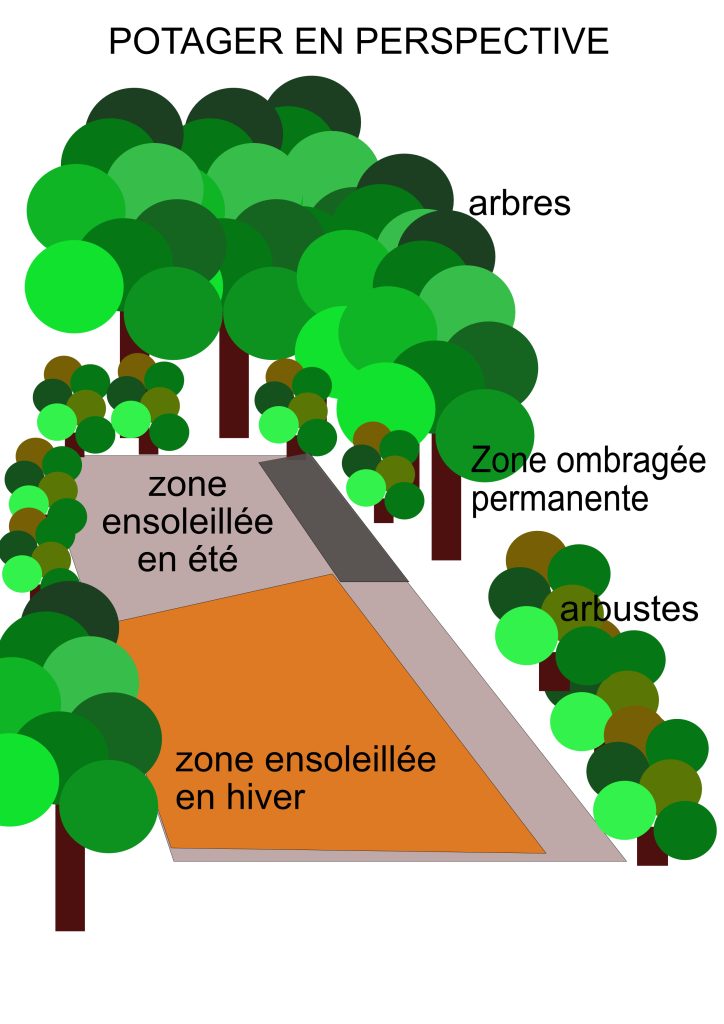
There are 3 main zones whose characteristics vary with sunlight, exposure to prevailing winds, rain, native plantings (trees, shrubs), buildings or screens. These elements create local microclimates over a few m².
— The winter-sunny zone is good for early plants and seeds that need quick soil warming to germinate, and for full-sun vegetables.
— The summer-sunny zone (when the sun is high enough). This zone suits summer vegetables planted from April-May.
— The permanently shaded zone is reserved for partial-shade plants, sensitive to strong summer sun.
You can also add to the project:
— One or more water reserves as 100L barrels — they must be covered to avoid rotting of fallen leaves and other debris. If the water comes from a gutter, a coarse filter and sand filter are needed. The water must stay clear. Watering with dirty water can cause leaf diseases or even kill plants. You can however add up to 5% urine. It’s up to the gardener to satisfy their need directly into the reservoirs.
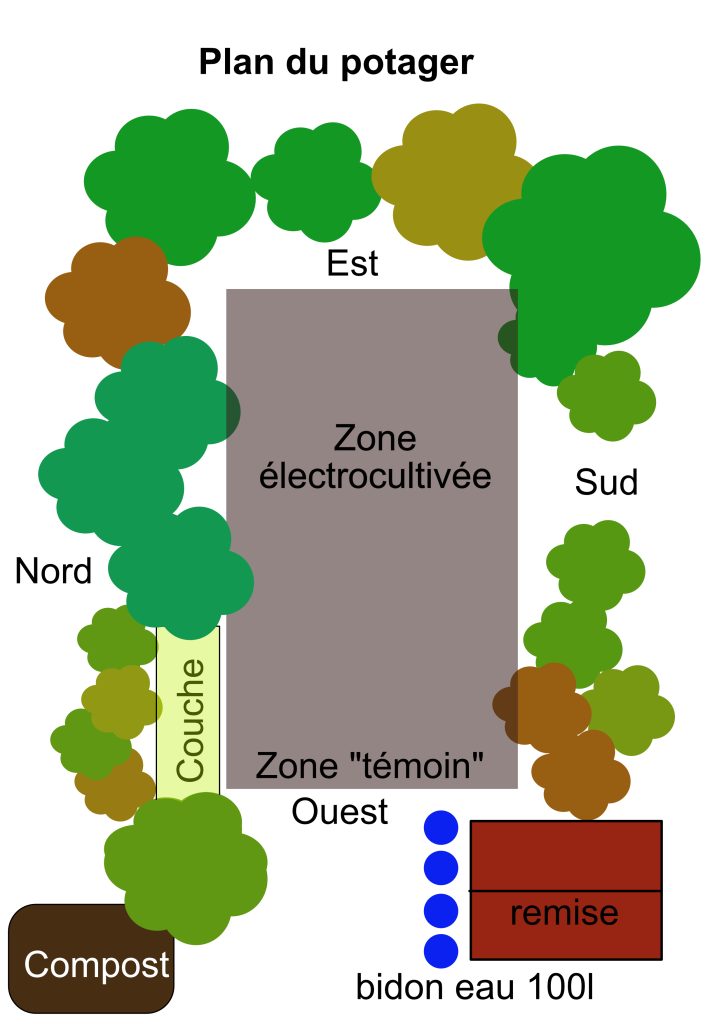
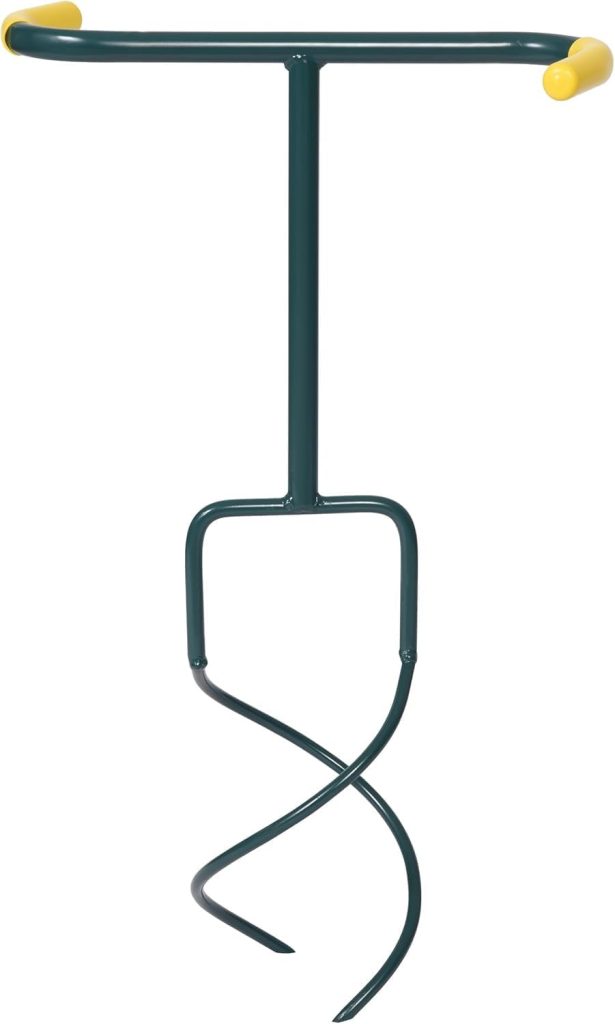
— A composting corner in the shade as a windrow or as an aerated wooden bin with two compartments of about 1m³ each, easily accessible. The compost should be watered in summer to avoid drying out, and mixed occasionally with a hook or a more practical aero-composter. Alternate layers of carbon-rich materials (dead leaves, wood bits, straw, RWB, etc.) and green manures, nitrogen generators (lawn clippings, grass, plant remains and kitchen scraps). This composting bin should be transitory — to apply residues quickly, before complete decomposition, on bare soil for in-situ composting. The composter becomes a storage place, not a transformation place for materials.
(learn more: see “Jardinez sur sol vivant” by Gilles Domenech, 2015, Larousse edition)
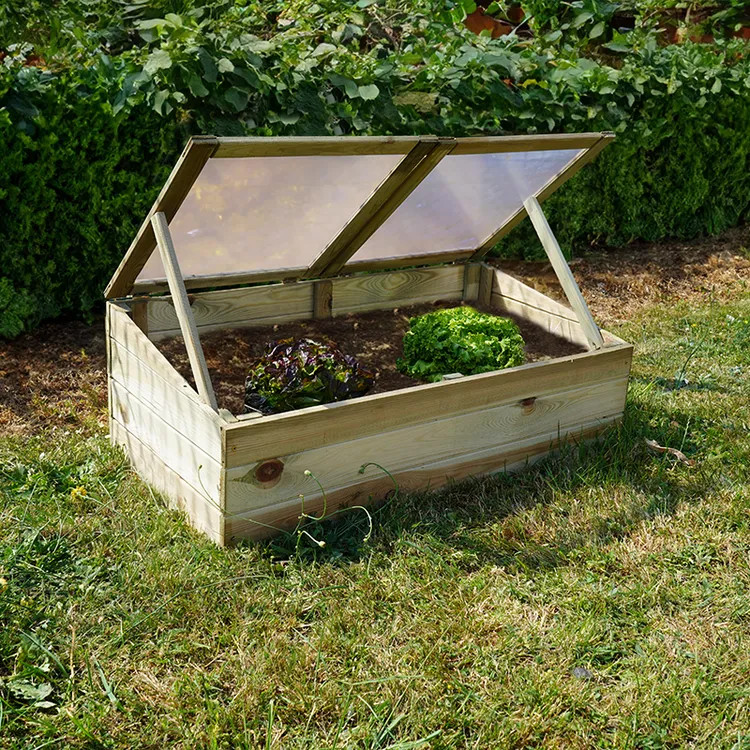
— A cold frame, i.e. a vegetable-garden surface surrounded by wooden boards and covered with removable glass panels (Burger brand). This south-facing mini-greenhouse lets you start seedlings as early as March, protecting them from cold and morning frosts. The frame can be heated at night in various ways. Use “special seedling” compost for good germination.
— A garden shed to store tools and machinery “dry” out of the rain, near the vegetable garden. The surface shouldn’t exceed 5m² to avoid the garden-shed tax (in France).